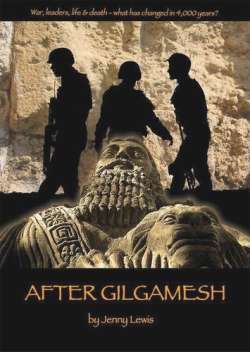
After Gilgamesh

Skip navigation

Home Page

Biography

Archive

Books

Projects

Teaching

Contact

In 2009, Jenny Lewis was commissioned to write a one and a half hour verse play, After Gilgamesh, for the inaugural programme of Pegasus Theatre's new, £7 million Heritage Lottery funded theatre, opening in autumn 2010.

The play will link with the book of poems which Jenny is currently working on. Taking Mesopotamia is about her father's rôle in the Mesopotamian (Iraq) campaign of WWI. He fought with the South Wales Borderers from May 1916 until January 1917, going into Basra with his company. He was wounded at Kut al Amara and invalided out to India where he stayed for the next 18 months. As well as her commissioning fee from Pegasus Theatre, Jenny has been given a generous grant from Arts Council South East to complete the two projects.

After Gilgamesh will be performed by the Oxford Youth Theatre with the Afropean Choir and fifteen young dancers in March 2011.

Jenny has worked closely with director Yasmin Sidhwa and dramaturg Rabab Ghazoul to create a structure for the play which allows interplay of ideas and plot between ancient Mesopotamia and modern day Iraq.

Members of the 'After Gilgamesh' team

Members of the After Gilgamesh team, 22 June 2010. From left to right: Emily Winfield, Emma Catherine, Jenny Lewis, Anita Daulne, Allan Hutson, Yasmin Sidhwa, Gill Jaggers and Rabab Ghazoul

Jenny is now working on the final draft of the play which will include extraordinary dance sequences, powerful choral music from the Afropean Choir using lines from the original epic, humour, drama and poetry. She says: "Our aim is to explore the relevance and topicality of one of literature's oldest epics and discover how its themes about the irresponsibility of leaders, the abuse of power, the fear of death and the human need for love and permanence have remained a constant for more than four thousand years."


The Story of Gilgamesh

The Pegasus play will explore the ancient Mesopotamian poem The Epic of Gilgamesh, which was first written down around 2,500 BCE in ancient Iraq and had been told orally much earlier. The most complete version existing today is preserved on twelve clay tablets in the library collection of the Assyrian king Ashurbanipal (7th century BCE).

Gilgamesh is two-thirds god and one-third human. He is an arrogant, ruthless and violent tyrant who makes life hell for his subjects. The citizens of Uruk finally call on the gods for help. Aruru, the goddess who created humanity, realizes that Gilgamesh is suffering from hubris, believing he is a god and lacking respect for his people.

Gilgamesh

In order to force Gilgamesh to understand his human side and accept it, Aruru creates someone to be a friend to Gilgamesh - the wild man, Enkidu. The two have many adventures including killing Humbaba, the giant who guards the Forest of Cedars and slaying the Bull of Heaven. When Enkidu dies, Gilgamesh sets out on a search for eternal life and is directed to Uta-napishti, the only survivor of the great Deluge (similar to Noah in the Flood story). Eventually Gilgamesh accepts that he will have to die and is advised by Siduri, the Tavern Keeper to enjoy the good things in life while he can. She says:

Slaying the Bull of Heaven
"cherish the little child that holds your hand,
and make your wife happy in your embrace;"

The play will interweave storylines and action from the ancient and recent past in Iraq, exploring themes about the responsibility of kings and leaders, the criminality of war, civilisation versus nature, the search for immortality and fame and the importance of friendship. The story will be told by a range of characters including the gods, goddesses and ordinary citizens of Uruk and modern soldiers who have fought in Iraq and their families.

Jenny Lewis says "The crossing over of ancient and modern timeframes is reminiscent of my first verse play with Pegasus, When I Became an Amazon (published 1996, Iron Press). It seems to be a technique that I naturally gravitate toward as a way of exploring big, humanitarian issues."


Read Jenny Lewis's article about verse drama (including two poems from After Gilgamesh) in World Literature Today.


Other projects or return to home page


Arts Council Enlgand and Heritage Lottery grant award logo